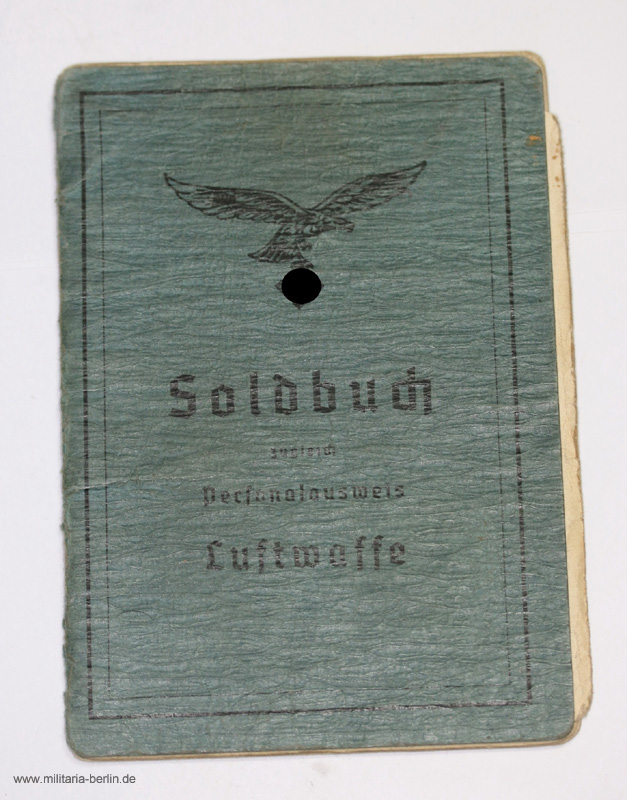
The paybook
The paybook served as a soldier's identification document in the German armies until 1945. It was originally used to receive the soldier's pay, hence the name "paybook."
It served as both an identity card for civilian authorities and proof of combatant status. This placed the soldier under the protection of international humanitarian law and the Geneva Convention.
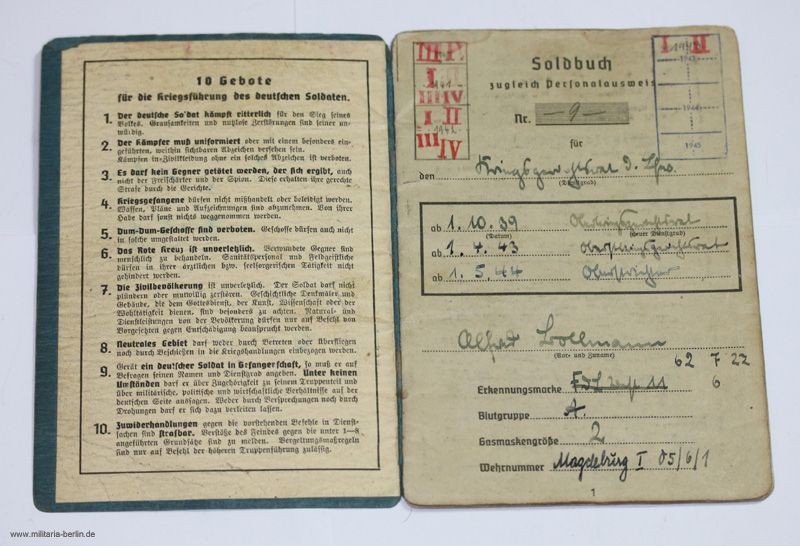
What was entered in the paybook
The soldier's personal data was recorded in the paybook: name, date of birth, place of birth, religion, height, parents' names, etc. It documented the owner's military career, promotions, units, awards, courses and training, injuries, etc. It also served as a record of equipment and clothing received, and in some cases, weapons and provisions.
Where was the paybook kept
The paybook was part of every soldier's personal equipment and had to be carried on the soldier's person at all times. It had to be presented to military superiors upon request. The paybook's counterpart was the military ID card. The military ID card also contained all the information from the paybook. The military ID card was kept at the owner's home unit so that it could be verified.
Value and purchase
The value of a military pay book can only be determined on a case-by-case basis. It varies as much as the owners themselves. Besides its condition and completeness, it depends significantly on the entries, particularly the unit/branch of service, rank, and any decorations awarded. Due to their large number, military pay books are generally not particularly valuable. However, individual pay books, especially those belonging to recipients of the Knight's Cross , can be worth well over €1.000.