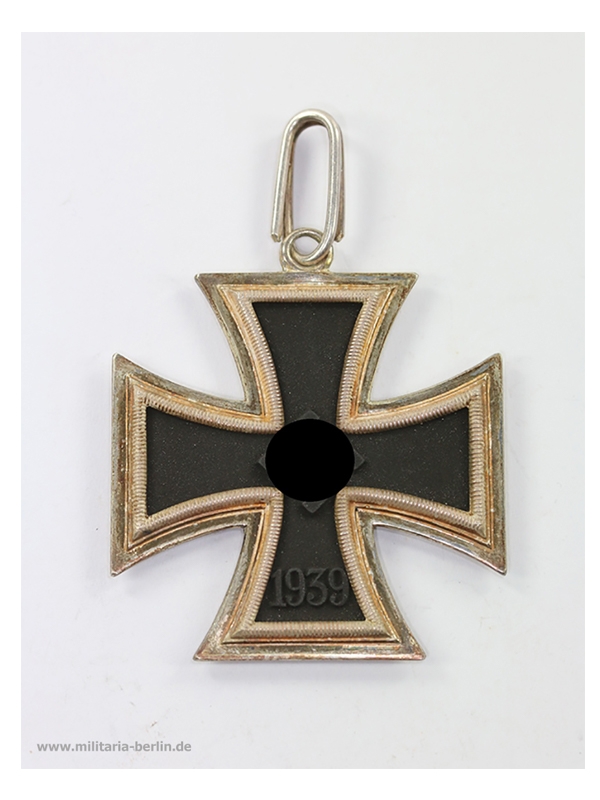
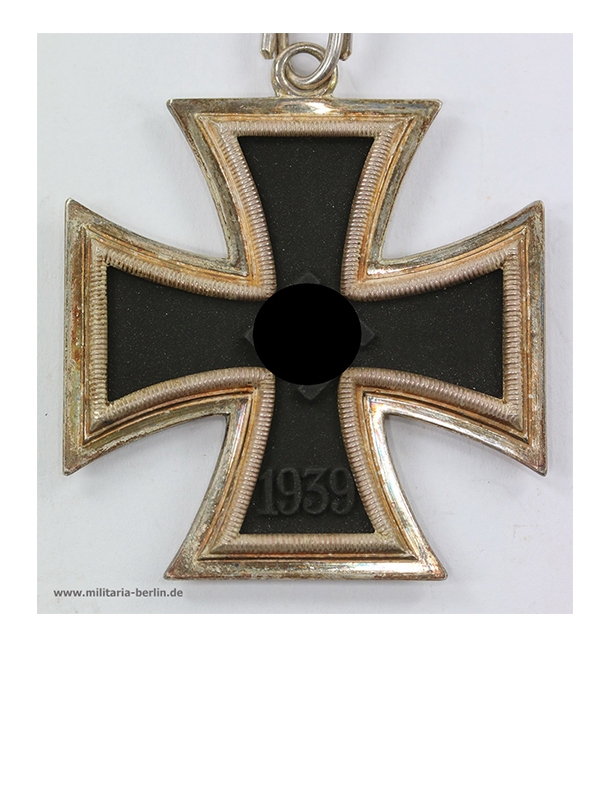
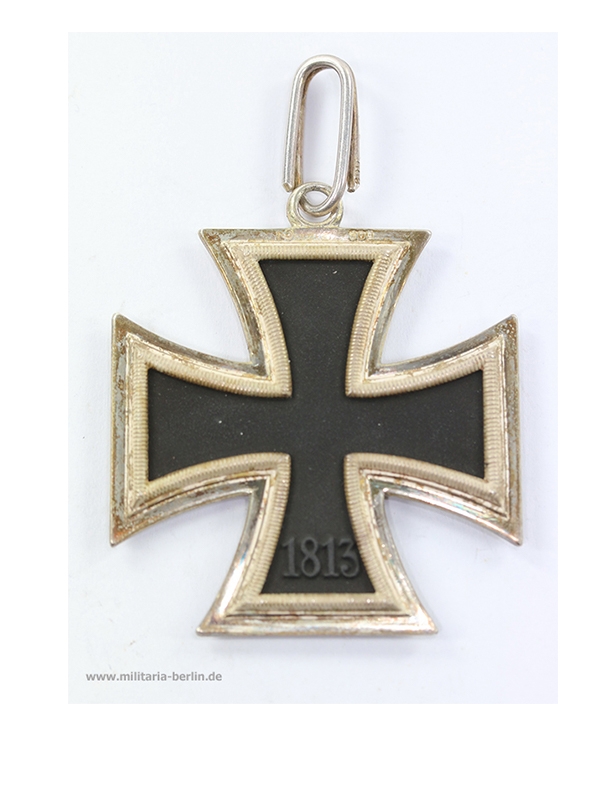
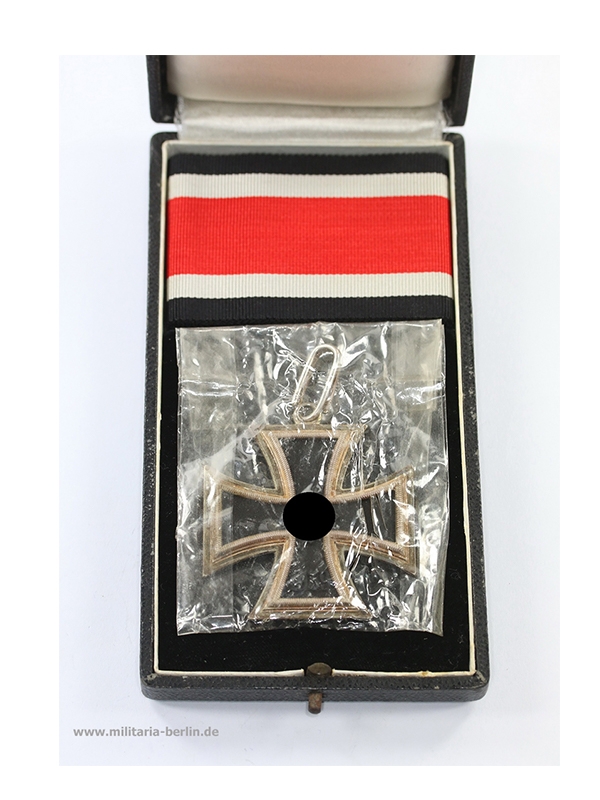
The Knight's Cross of the Iron Cross, manufacturer Juncker, variant "lying 2", "lazy two"
The Knight's Cross of the Iron Cross is a higher level of Iron CrossIt was first established by Adolf Hitler on September 1, 1939. The Knight's Cross was awarded approximately 7.200 times during World War II. It could be awarded equally to all ranks. Over the course of the war, the Knight's Cross was expanded to include further degrees: the Oak Leaves (June 3, 1941), the Oak Leaves with Swords (September 28, 1941), the Oak Leaves with Swords and Diamonds (December 28, 1941), and the Golden Oak Leaves with Swords and Diamonds (December 29, 1944). The Knight's Cross is one of the most famous awards of World War II.
The lenders, the Knight’s Cross recipients, enjoyed high esteem at home and abroad.
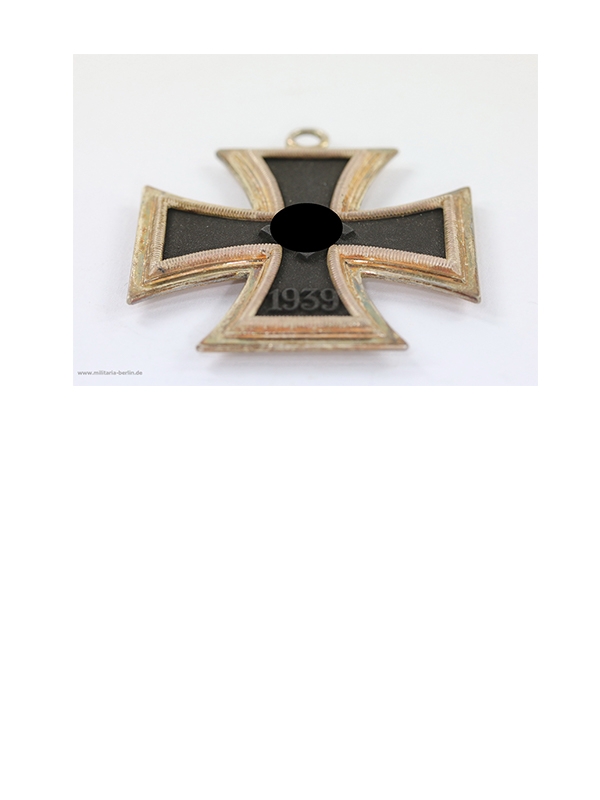
The design of the Knight's Cross was based on the Iron Cross, which had already been instituted in 1813. The original design came from the renowned architect Karl Friedrich Schinkel ( https://de.wikipedia.org/wiki/Karl_Friedrich_Schinkel ). It is a cross pattée in shape. The black iron core is surrounded by a silver frame with a ribbed decorative edge and polished corners. A loop at the top of this frame holds the suspension ring (jump ring). On the obverse, a swastika is centered at the 6 o'clock position, along with the year of its establishment, 1939. The reverse features the same black core, with the year 1813 at the 6 o'clock position, commemorating the first instituted Iron Cross in 1813 (War of Liberation). The Knight's Cross was worn as a neck decoration on a black, white, and red ribbon.
The company CE Juncker
The CE Juncker company was founded in Berlin in 1851. The name derives from its founder and first owner, Carl Eduard Juncker. Until 1913, the company operated exclusively as a manufacturer and seller of uniforms and uniform insignia. From 1913 onward, the focus shifted increasingly to the distribution and production of medals and badges. However, the uniforms and insignia division was never completely abandoned. The company's address was Alte Jakobstrasse 13, Berlin, SW 68. The company headquarters was almost completely destroyed by Allied air raids in 1944. As far as is known, production has since ceased.
After the end of the war, the Juncker company resumed production in West Berlin (Kreuzberg) in the early 1950s. Among other things, it was one of the first producers of the Order of Merit of the Federal Republic of Germany (Federal Cross of Merit). It was finally closed at the end of 1965.
From the very beginning, the Juncker company was known for the excellent quality of its products. At the outbreak of war in 1939, it was one of the first producers of the reinstated Iron Cross and the newly established Knight's Cross. This made CE Juncker an official supplier to the Order's Chancellery.
As the war progressed, the company developed into one of the largest manufacturers of orders and decorations in Germany. It produced almost the entire range of established orders and decorations. Today, pieces from the CE Juncker company are very popular with collectors. This is due in part to the high quality of workmanship and in part to the unique designs of some of the pieces. Another point of interest for collectors is the destruction of the factory in 1944, which rules out continued production after the surrender in 1945. This point becomes particularly important when compared with the company Steinhauer & Lück in Lüdenscheid. The company Steinhauer & Lück is known to have continued producing World War II war decorations even after 1945.
Knight's Cross: Variant "lying 2", "Lazy two"
This variant is the last one produced by CE Juncker. The first awards are known to have been made towards the end of 1944. They were awarded until the end of the war in May 1945, and crosses of this variant were also found in the Order Chancellery's holdings, which were relocated to Klessheim Castle after the surrender.
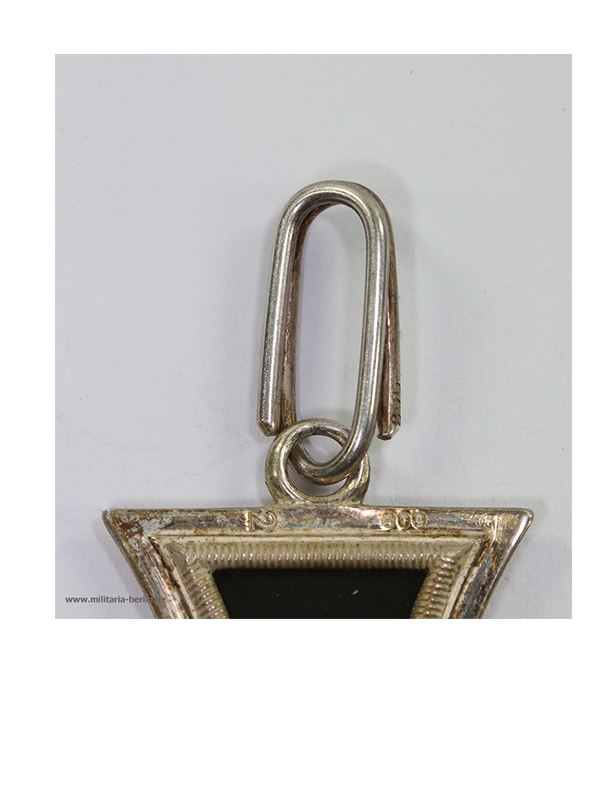
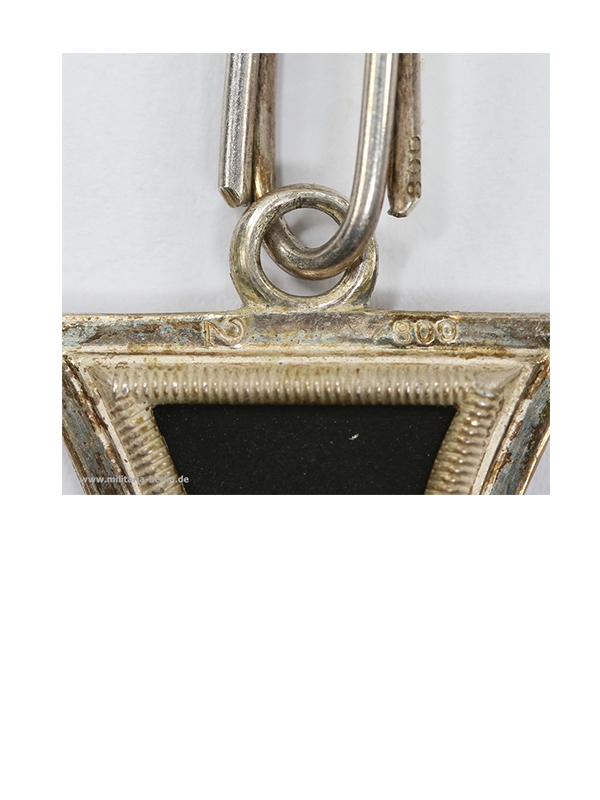
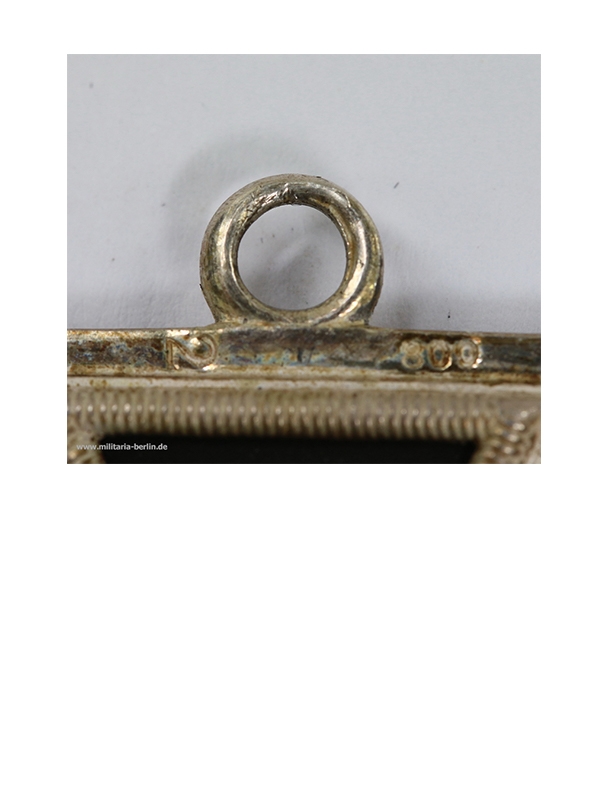
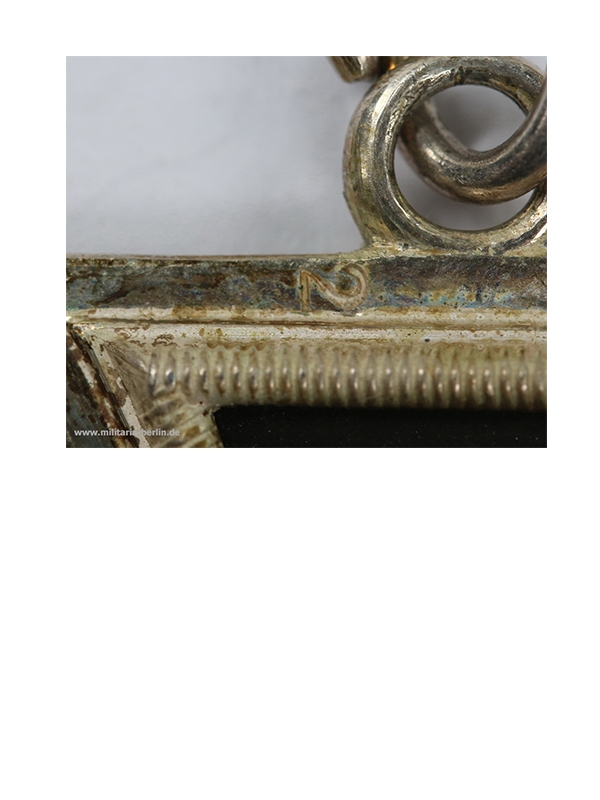
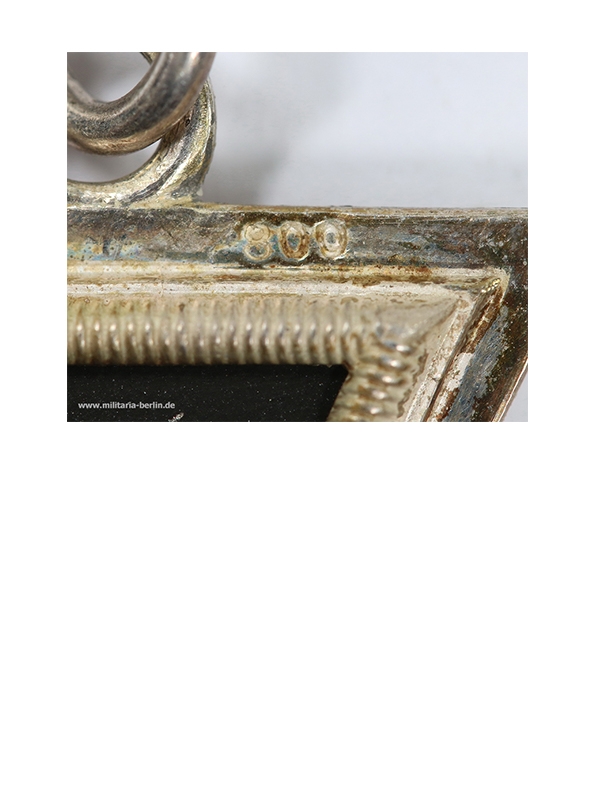
The crosses of this variant are marked on the reverse of the polished edge of the 6 o'clock arm with a "2." This two is depicted lying down. Hence the name of the variant, "lying 2," or "lazy 2" in English. The "2" can be depicted lying on its front or back. The "2" stands for the company CE Juncker in the code system of the Presidential Chancellery. Next to it is the silver hallmark for the fineness of "800."
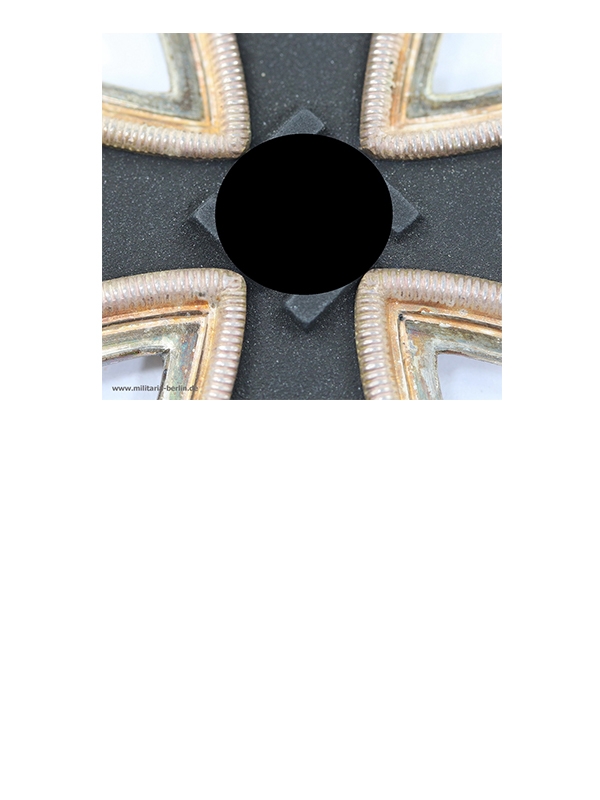
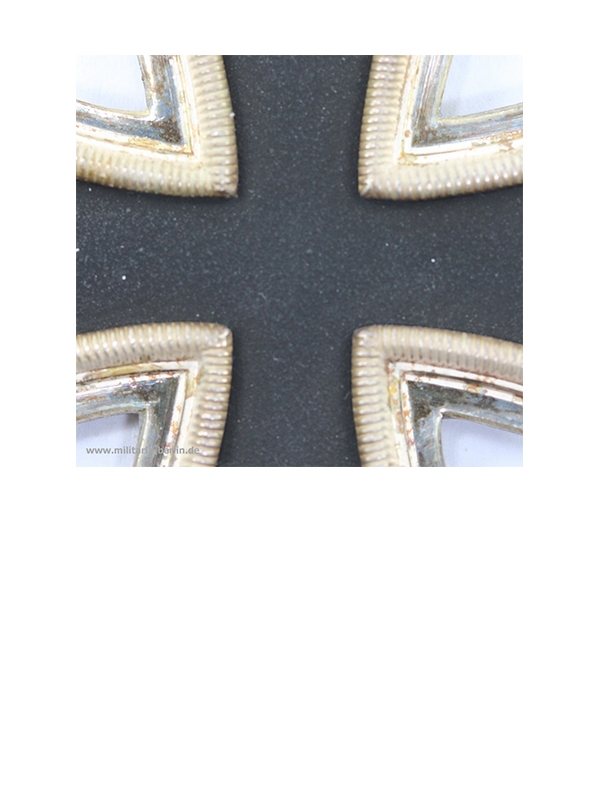
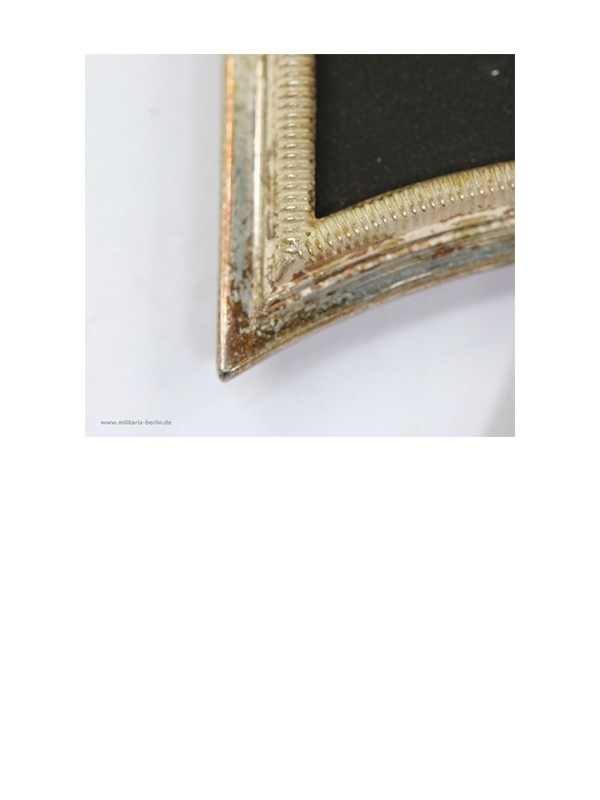
The crosses of this variant exhibit all the familiar characteristics of a typical Juncker Knight's Cross. Such as the "picket fence effect" on the central inner corners of the frame. The ribs of the individual inner edges of the frame sides converge here in a characteristic system. It looks somewhat like the crossing points of a picket fence. Hence the name. See images 7 and 8.
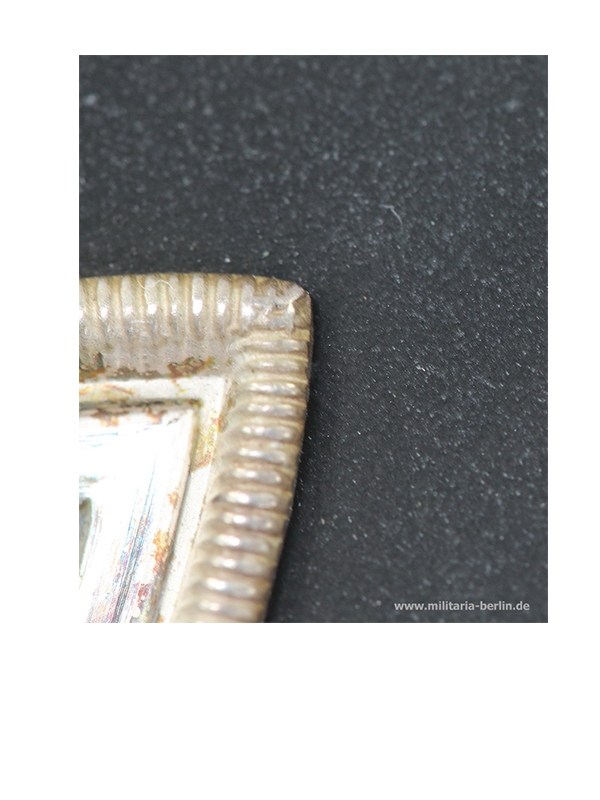
A very similar pattern, just as characteristic of a Juncker Cross, emerges at the outer points of the frame. Here, too, the converging ribs create a striking pattern. See Figure 9.
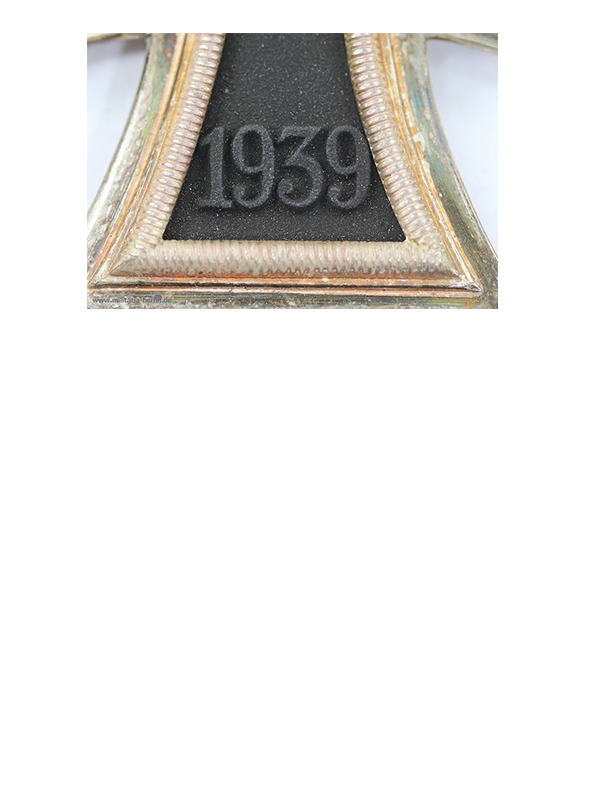
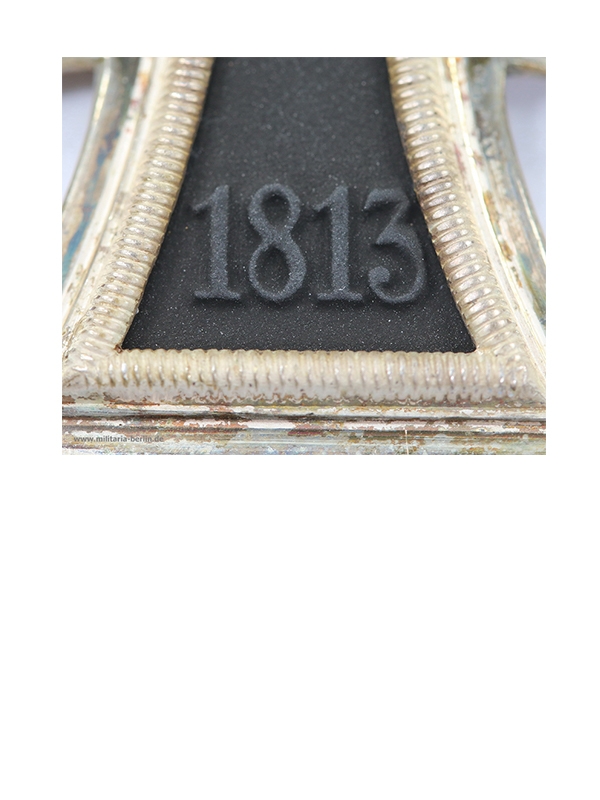
The shape and embossing of the dates on the obverse and reverse (1939 and 1813, respectively) are always the same and absolutely characteristic of all Juncker Knight's Crosses. Minor deviations may occur due to wear and tear on the embossing tools during the production period. See images 4 and 6.
The crosses of the "lying 2" variant all feature a matte black core finish. They are particularly dark and have a dull, slightly rough surface. The paint application is thicker and less durable than in earlier versions.
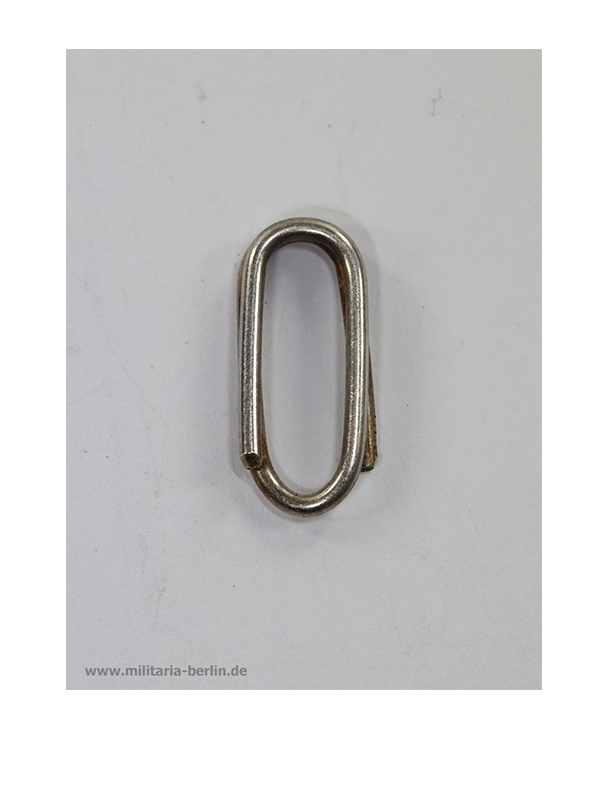
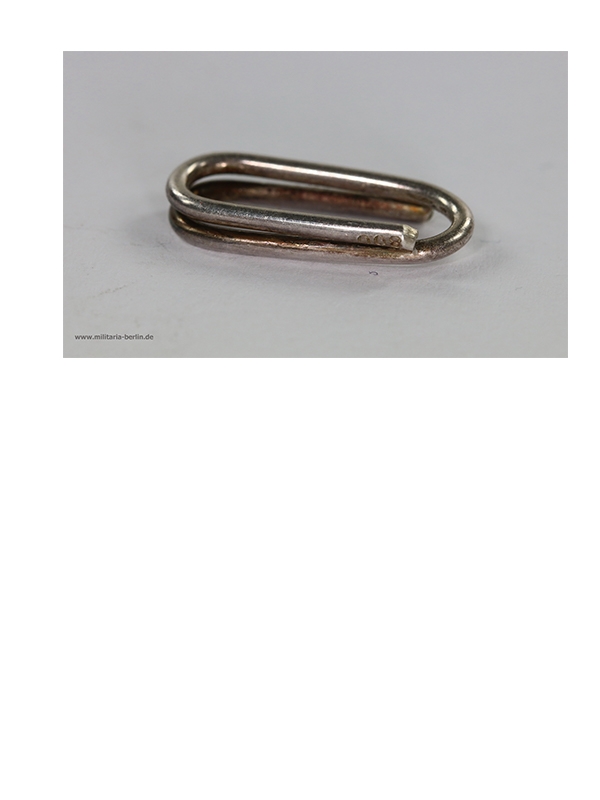
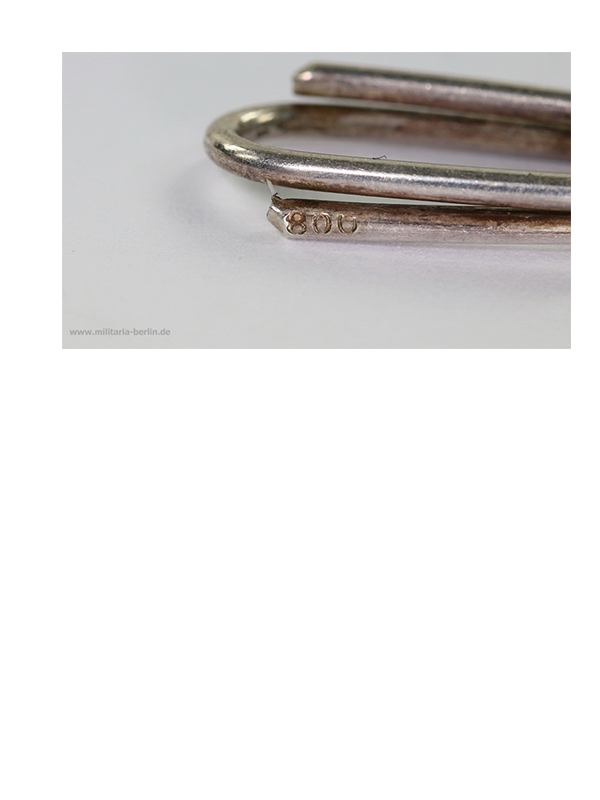
The jump ring is bent from 1,5 mm thick silver wire. It bears the silver hallmark "800." See images 16 to 18.
The core is always made of iron, so it is magnetic, the frame and the jump ring are always made of silver.
Crosses of this variety are rare and very popular with collectors. Because the core lacquer was not particularly durable, crosses in very good condition are disproportionately expensive. Knight's Crosses of this variety typically sell for between €7.000 and €10.000. Crosses with a carrier's provenance or in above-average condition can fetch up to €15.000.
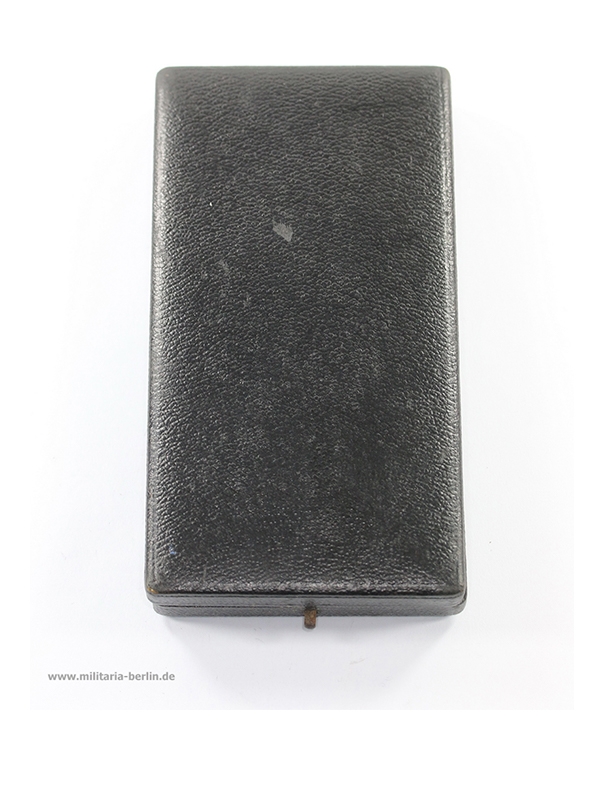
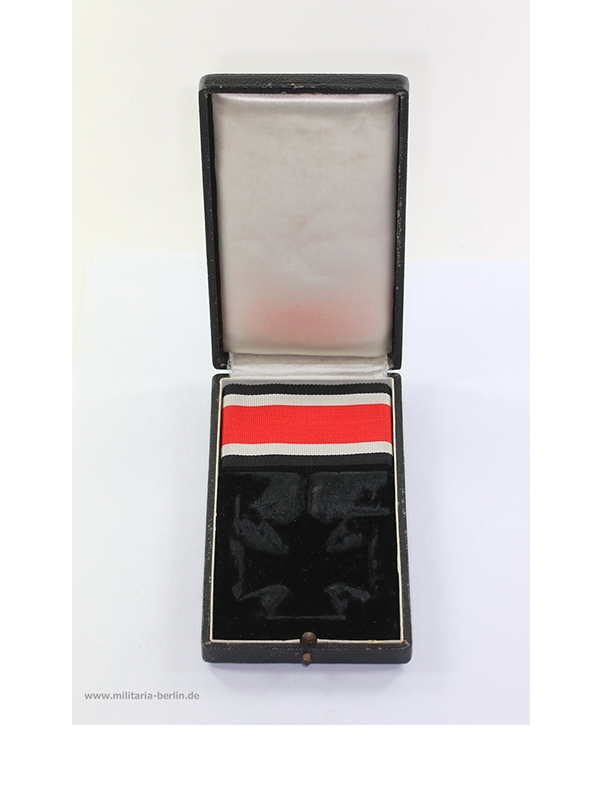
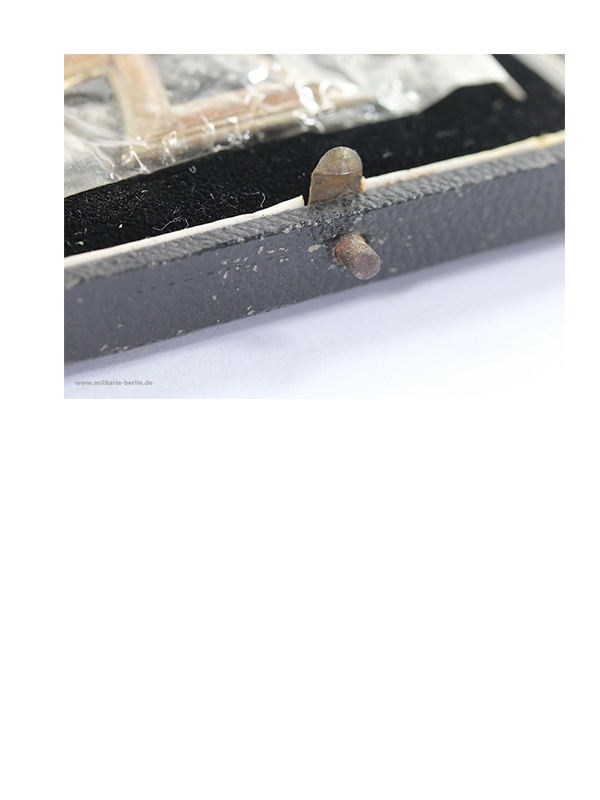
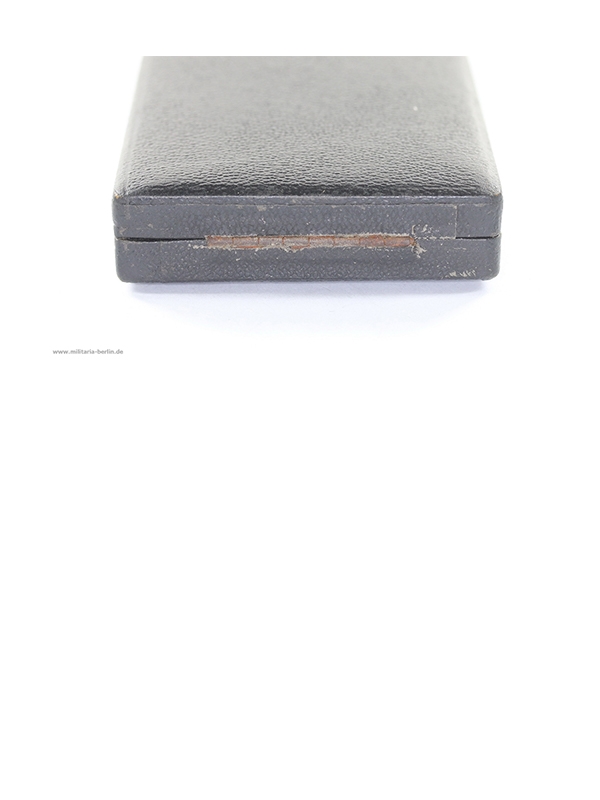
The typical case for a "lying 2" is a late case, with simple pushers and square inner edges. The exterior has a narrow, simple decorative border. See images 19 to 23.
Dimensions (minimal deviations in the range of +/- 0,1 -0,3 mm are possible):
- Width 48 mm
- Height (cross without eyelet) 48 mm
- Height (cross with eyelet) 54,6 mm
- Thickness (frame on the ribs) 5,1 mm
- Thickness (frame on the edges) 1,3 mm
- Eyelet diameter (outside) 6,5 mm
- Eyelet diameter (inside) 4,0 mm
- Width swastika 12 mm
- Width arm swastika 3 mm
Weights (deviations of a few grams are not uncommon):
- Weight with jump ring 33 g
- Weight without jump ring 31 g
- Weight jump ring 2 g