The Panzer Combat Badge
The Panzerkampfabzeichen (PKA) was the weapon insignia of the Panzer and Panzergrenadier units of the German Wehrmacht during World War II. It was established on December 20, 1939, by Colonel General Walther von Brauchitsch, Commander-in-Chief of the Army. It was initially called the Panzerkampfwagenabzeichen (Panzer Combat Vehicle Badge), a reference to the badge of the same name from World War I. A few months after its establishment, the name was finally changed to Panzerkampfabzeichen (Panzer Combat Badge).
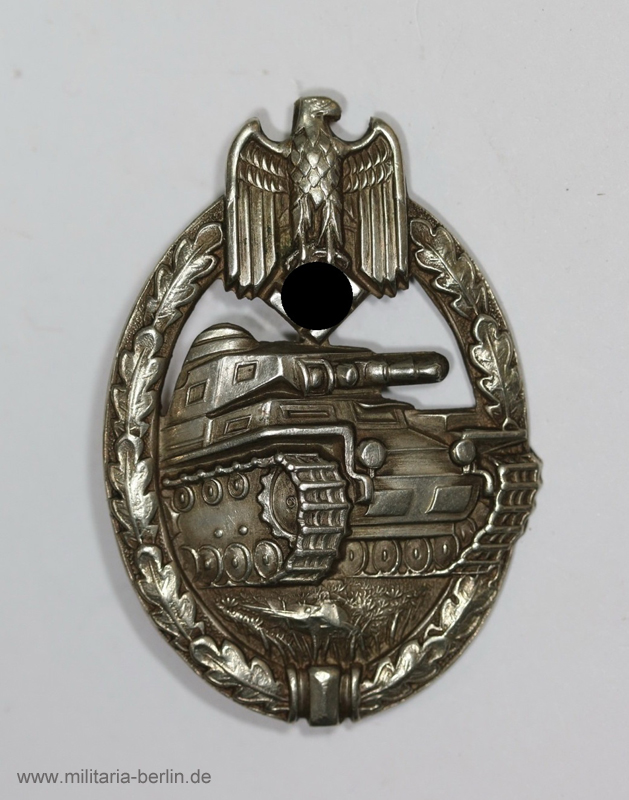
Panzer Combat Badge in Silver
Initially, the Panzer Combat Badge was only available in silver. It was awarded to all Panzer troops who had proven themselves as a member of a tank crew in three different combat missions on three different days. The crew had to have actively participated in combat operations on each of the three days.
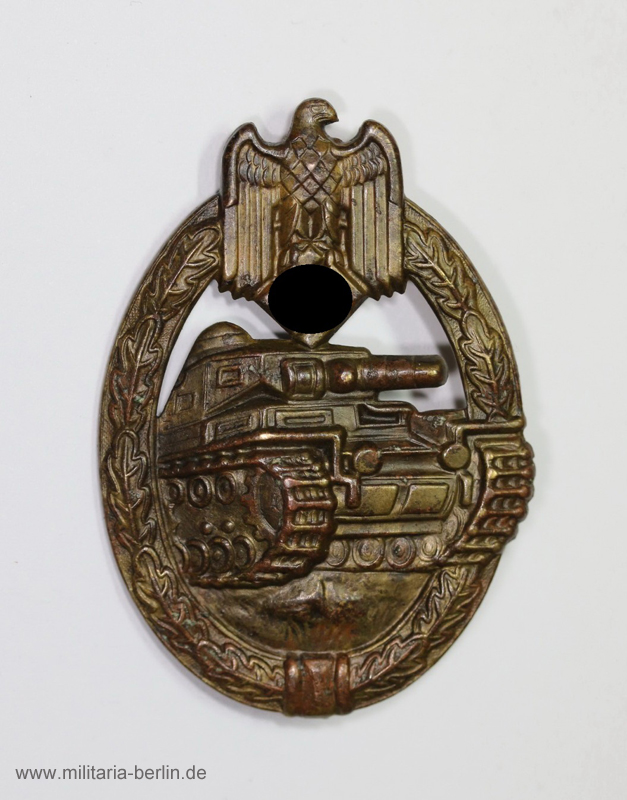
Panzer Combat Badge in Bronze
The increasing importance of the Panzergrenadiers and other support units during the course of the war made it necessary to create a separate combat badge for these units. This was achieved with the establishment of the Panzer Combat Badge in Bronze on June 1, 1940, again by the Commander-in-Chief of the Army, Colonel General Walther von Brauchitsch.
The award regulations were similar to those for the silver badge. The recipient had to prove themselves in three different assaults. This required breaking into enemy positions with a weapon in hand. Participation in reconnaissance patrols and similar operations could also be recognized accordingly. This was somewhat comparable to the General Assault Badge.
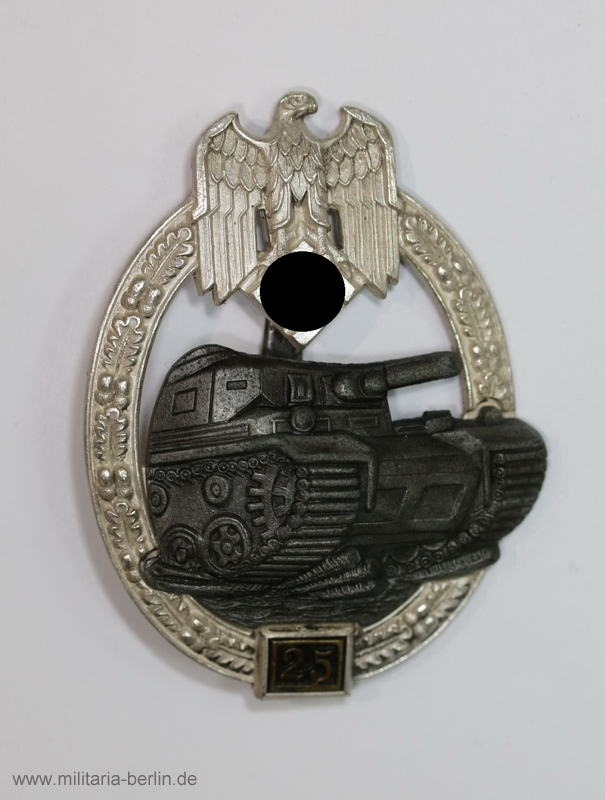
The levels of the Panzerkampfabzeichen
Originally established at a single level, the further course of the war made it necessary to create higher levels for the Panzerkampfabzeichen (in silver and bronze). This was due to the fact that more and more members of the Panzer troops or supporting units were exceeding the award requirements for the Panzerkampfabzeichen. With a decree of June 22, 1943, the Army High Command finally approved its introduction.
For 25 combat days, the badge was now awarded with the number "25," for 50 combat days with the number "50," and so on with "75" and "100." Even higher levels were planned but were not realized by the end of the war. Thus, there were a total of five levels of the Panzerkampfabzeichen, each in silver and bronze:
- I. Level: The Panzer Combat Badge
- II. Level: The Panzer Combat Badge with 25 missions
- Level III: The Panzer Combat Badge with 50 missions
- IV. Level: The Panzer Combat Badge with 75 missions
- V. Level: The Panzer Combat Badge with 100 missions
Design of the Panzer Combat Badge
A tall oval, openwork badge. The edge is a wreath formed of oak leaves, bound at the bottom. In the center of the wreath is a tank moving to the right. On the right, the tank's running gear protrudes above the oak leaf wreath. At the top of the wreath is the national eagle with a swastika. Both silver-plated and bronze-plated.
Award numbers of the Panzer Combat Badge
Approximately 23.500 silver and 14.200 bronze badges were awarded. Recipients could also purchase the badge upon presentation of the award certificate or their pay book with the corresponding entry. Therefore, the actual number of badges in existence is likely significantly higher.
How to wear the Panzerkampfabzeichen
The badge was worn on the left side of the uniform, approximately at breast pocket level. If the recipient also held the Iron Cross 1st Class, the Tank Battle Badge was worn below the Iron Cross.
Value and purchase of a Panzerkampfabzeichen
Due to the large number of different variants, a value can only be determined individually. A simple Panzerkampfabzeichen is often worth no more than €150, but rare variants in very good condition can fetch up to €1.000.
Badges with a service number are generally more expensive than badges without. They start at around €1.500, but can exceed €10.000 for the highest levels. Large estates, including certificates, photos, etc., naturally always bring in more money.