The War Merit Cross (KVK)
The War Merit Cross was instituted by Adolf Hitler on October 18, 1939. Until the end of the First World War in 1918, the German states awarded their own orders and decorations for wartime service. In Prussia, for example, the Iron Cross 1st and 2nd Class on the so-called white-black ribbon was awarded to "non-combatants." At the national level, there was no comparable award until then.
The classes of the War Merit Cross
It was established in 1939 in only two levels, First and Second Class, each with and without swords. In 1940, two further levels were added: the War Merit Medal, now the lowest level, and the new highest level, the Knight's Cross of the War Merit Cross, each with and without swords. Adolf Hitler reserved the right to award the Knight's Cross of the War Merit Cross for himself.
Design
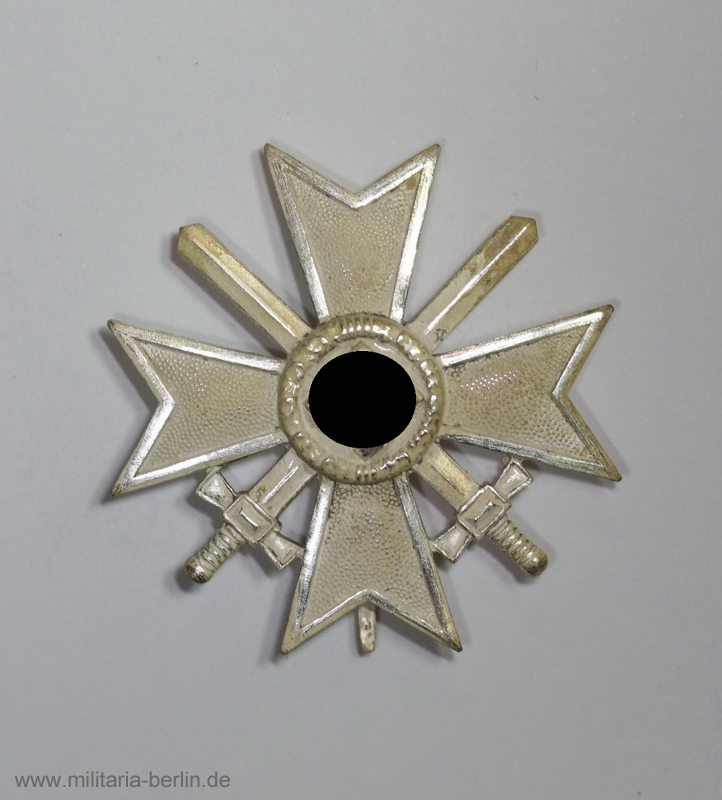
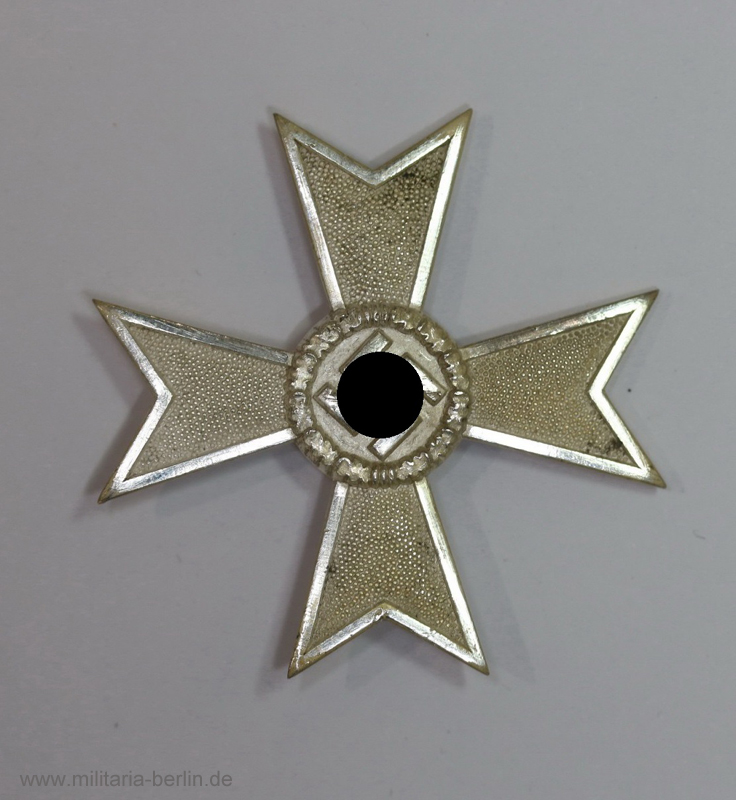
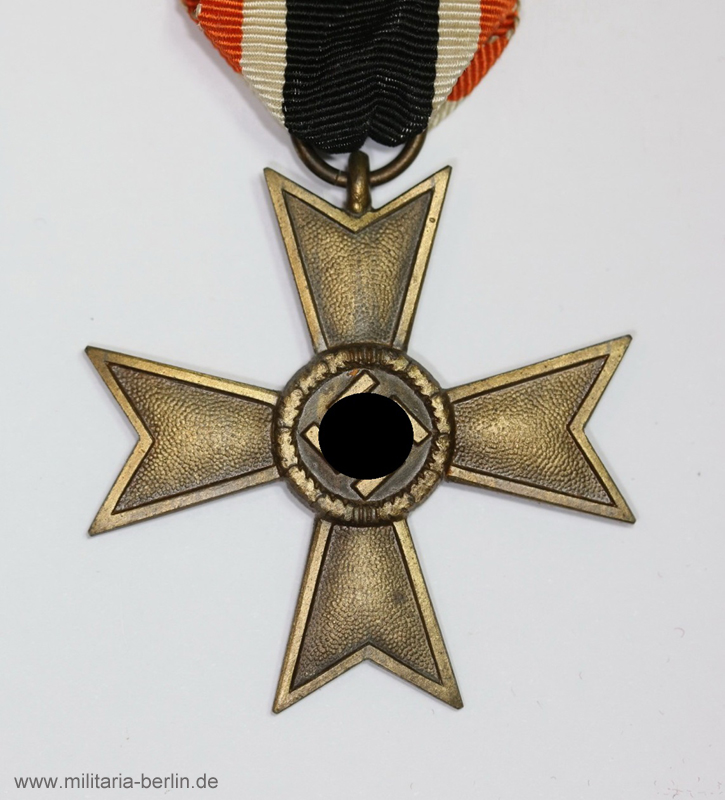
The War Merit Cross is shaped like an eight-pointed Maltese cross with a rounded center. The obverse features a swastika with an oak leaf wreath. The reverse bears the year of its foundation, "1939." The Second Class is in bronze, the First Class, and the Knight's Cross are in silver. Those awarded with swords also feature crossed swords running through the center.
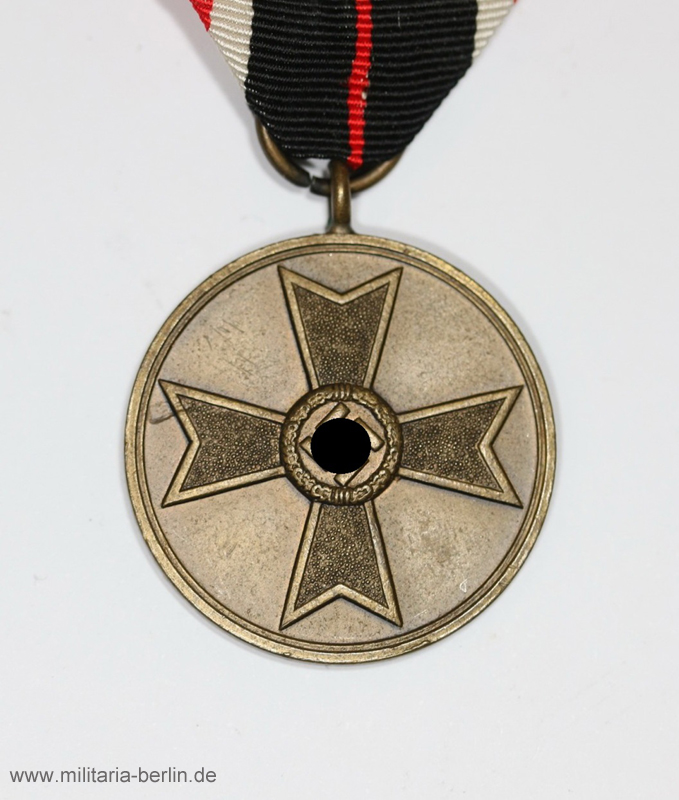
The War Merit Medal is a circular, bronze-colored medal. The obverse features an embossed eight-pointed Maltese cross. A swastika is located in the center of the cross. The reverse bears the inscription "For War Merit 1939."
Requirements for the award of the War Merit Cross
The War Merit Cross was awarded for "special services during the war" that did not meet the requirements for the Iron Cross. While the Iron Cross always required an "act of arms" to be awarded, the War Merit Cross was created to honor individuals who had not performed an "act of arms" but had performed another act of war significance. It could be awarded to soldiers, other uniformed personnel, such as police officers, railway workers, etc., as well as to civilians.
The War Merit Cross with Swords was awarded "for distinguished merits during operations under enemy arms or for distinguished merits in military warfare." The Cross without Swords was awarded "for distinguished merits in the performance of other wartime duties that did not involve operations under enemy arms."
The War Merit Medal could only be awarded to civilians.
wearing Method
The medal and the Iron Cross, Second Class, were worn on a ribbon. However, only on the day of the award. Afterward, as with the Iron Cross, Second Class, the cross was removed and only the ribbon itself was worn. It was threaded through the second buttonhole of the uniform jacket and sewn in place. It was also worn as a ribbon bar above the left breast pocket. The First Class was designed as a pin-on cross and was worn accordingly on the left breast pocket of the uniform.
The Knight’s Cross, like the Knight's Cross of the Iron Cross, worn as a neck medal.
Award figures for the War Merit Cross
The War Merit Medal and the War Merit Cross, Second Class, were mass awards and were awarded millions of times. Unfortunately, the exact award figures are unknown today. However, over 2,7 million War Merit Crosses, Second Class, were awarded to members of the Army alone. The War Merit Cross, First Class, was awarded approximately 140.000 times to members of the Army.
The Knight's Cross of the War Merit Cross was awarded 174 times with swords and 52 times without swords.
Value and purchase
Due to the large variety of different variants, a value can only be determined individually. For example, a War Merit Cross, Second Class, as a mass-produced award, is generally worth no more than approximately €20. However, a First Class award can cost over €100, and the rare Knight's Crosses can fetch €10.000 or more.