The German Cross
The German Cross was instituted on September 28, 1941, by Adolf Hitler as a war decoration, in gold and silver classes. The order was intended to close the "award gap" between the Iron Cross 1st Class and the Knight's Cross . It was meant to honor soldiers who had already received the Iron Cross 1st Class, but whose actions did not yet qualify them for the Knight's Cross. The German Cross is therefore often seen as a replacement for the Knight's Cross of the House Order of Hohenzollern , which fulfilled this function during World War I. It was also intended to bridge the gap between the Iron Cross 1st Class and the Pour le Mérite order.
Design of the German Cross
The German Cross is an eight-pointed breast star made of silver-plated metal. A second, slightly smaller star made of blackened metal is applied to this first star as a base plate. On top of this star is a stylized laurel wreath made of gold or silver, with the year of its foundation, "1941," engraved at the bottom. The laurel wreath encircles a black enameled swastika. Its diameter is 65 mm. A pin is attached to the reverse of the German Cross.
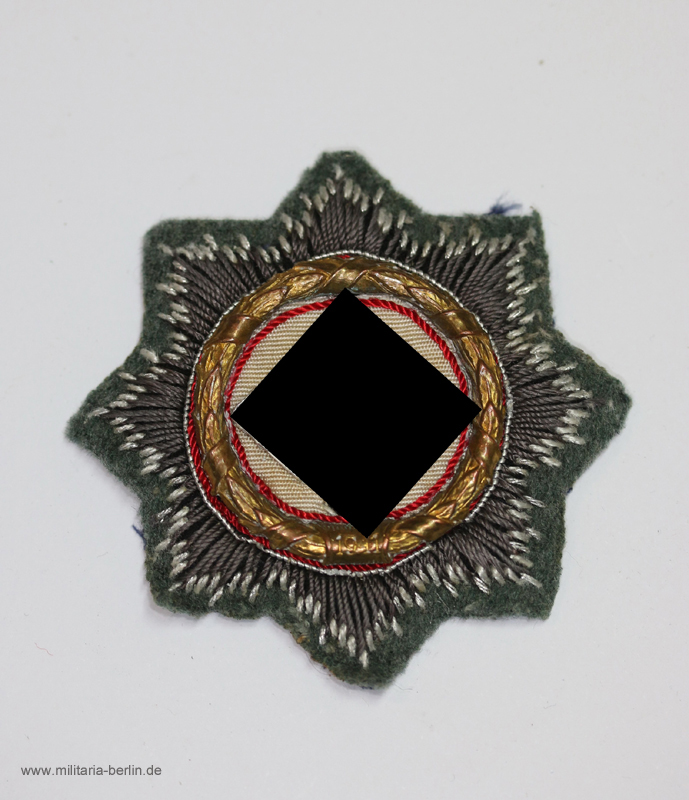
There are also versions of the German Cross made of fabric.
Requirements for the award of the German Cross
The German Cross was established in two divisions, gold and silver. The foundation decree states that the German Cross in Gold is awarded for repeatedly demonstrated exceptional bravery or for repeatedly demonstrated exceptional achievements in command. The award conditions are thus directly linked to those for the Iron Cross, with the addition of "multiple."
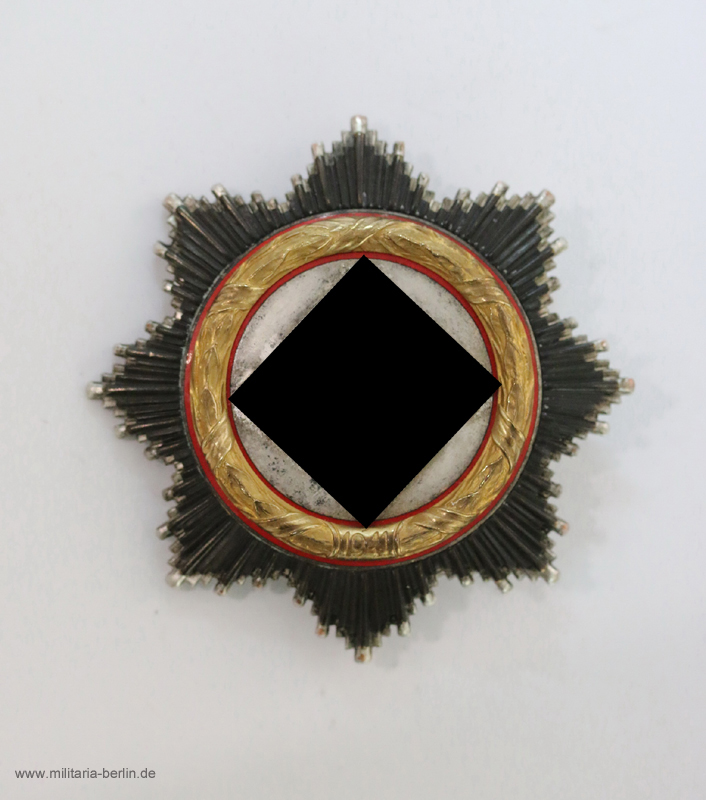
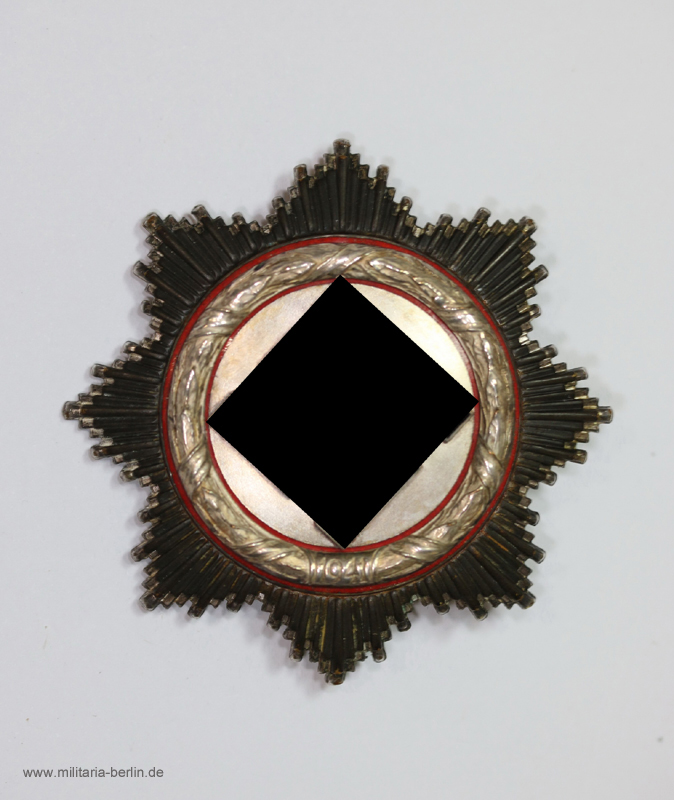
The German Cross in Silver was awarded for multiple exceptional achievements in military warfare. The award criteria are directly linked to those for the War Merit Cross , again with the addition of the word "multiple".
Number of awards of the German Cross
The German Cross in Gold was awarded approximately 26.000 times, and the German Cross in Silver approximately 2.500 times by the end of the war. The first German Cross in Gold was awarded to a member of the Luftwaffe on October 15, 1941. Members of allied armed forces could also be awarded the medal; a total of 26 foreign nationals were awarded the German Cross.
Wearing the German Cross
The decoration was worn as a pin-on medal (like the Spanish Cross ) on the right breast. If the recipient had already been awarded the Spanish Cross, the German Cross was worn over it. Besides the usual metal version, the decoration could, in exceptional cases, also be worn in a cloth version on combat uniforms to prevent damage.
Buy and sell German Cross: Value
Due to the sheer number of different variants, a value can only be determined individually. Large estates, including documents, photos, etc., can sometimes be worth well over €10.000. However, individual crosses or documents are also very interesting for collectors and command a correspondingly high price.